

Can we embrace masculinity in a world full of Alpha males that the Animal movie depicts?
Animal Movie released on 1st December 2023. Although I am not a fan of these bloodshed gangster movies, the star cast was compelling enough for me to watch.
Toxic Masculinity examples from the animal movie can be witnessed throughout especially from the character (Ranvijay) played by Ranbir Kapoor. Although this shade was not ingrained in him, it developed as he grew older.
Toxic Masculinity examples(Animal movie)
Several instances from the movie can be seen glorifying toxic masculinity. Here are a few dialogues from the movie that express the same.
Ranvijay to father,” Aapke baad who is the man-in-charge Papa? I am.”
Ranvijay to sister,” Is baar kuch hua na college mein, daraunga nahi, sidha goli marunga.”
We often witness these stereotypes around us. Certain roles are allotted to each gender and breaking the norm seems to be next to impossible. This “set of rules” is backed with historical evidence and facts. They have also been followed within families for generations.
One such belief is that men are anatomically different from women and hence they are capable of performing physical tasks in a better way than their female counterparts.
ScienceDaily in one of its published articles states that there is no evidence that tasks/roles were allotted to prehistoric folks based on gender.
Table of Contents
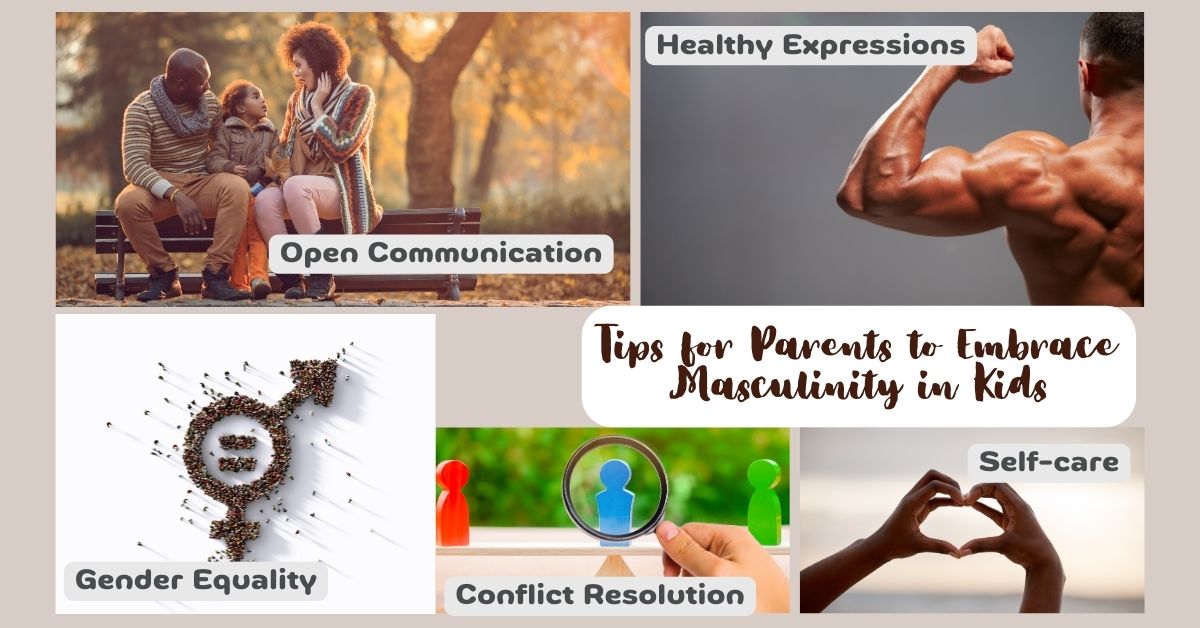
Tips for Parents to Embrace Masculinity in Kids
1 Encourage Open Communication
An honest and open communication with the family can be of great help, especially for younger kids.
Home- A Safe Place to Express.
Parents must assure kids that they can express themselves how they want to at home. Anger, sadness, and joy are all “acceptable” and no one is judging them for any mistakes.
Provide Emotional Validation to their feelings.
To err is human. It is okay to make silly mistakes or act foolish. We all are and have been stupid in life. So are kids. Parents can motivate children by acknowledging their feelings and guiding them in the best possible way.
Normalize vulnerability
To make kids comfortable with expressing their emotions, parents can share their own experiences and struggles. This will assure kids that it is okay to project emotions and is not a sign of weakness.
2 Modelling healthy expressions to embrace masculinity
It is not okay to merely challenge stereotypes. We also need to teach our future generations about ways to embrace masculinity healthily.
Embrace Empathy and Compassion
The values of kindness and caring are sometimes associated with feminism. But this is not true. People like Nelson Mandela, Mahatma Gandhi and many more have helped people in an unbiased way. Parents can cite examples of these personalities to encourage acts of service and support within children.
Challenge stereotypes
Parents can discuss any potential myths or existing stereotypes that can be an emotional blockage to help kids embrace masculinity in the future. But before challenging those myths, it is the responsibility of parents to let children be aware of the reasons for doing so.
It is the responsibility of a son to take care of his parents.
A belief that could deny a daughter from taking up this responsibility is that she will be married one day to take care of her house(in-laws). But this is untrue. Daughters do get married and have the responsibility of taking care of their in-laws. But this doesn’t make her any less of a daughter. It is the collective responsibility of children to take care of their parents.
Celebrate Role Models
Famous personalities like M F Hussain, Akbar Padamsee, Amitav Ghosh, Vishal Dadlani, Aamir Khan, Barack Obama and many more have defied the image of ‘macho’ in their respective fields. Parents can teach kids about the concept of healthy masculinity by referring them.
Role models can also be found around us. Any person/family who has diverted from the so-called ‘normal’ can be a role model.
The Chopras who live nearby can be a real-life role models. Mrs Chopra (a doctor) leaves home every day by 8:30 a.m. Mr Chopra on the other hand is a painter who works remotely and takes care of the house throughout the day. Although their roles are reversed as per the norms of society, Mr Chopra is no less masculine than any other man.
Lead By Example
Modern concepts like teaching kids to embrace masculinity can only validate themselves when kids visualize it in real. This also means that parents need to adopt such concepts. Parents need to be mindful of their behaviour by avoiding anger/violence as a tool to resolve conflict. Instead switching to healthy problem-resolving strategies can be beneficial.
3 Promote Gender Equality
Educating Children about gender equality is very important. It is as much okay for a girl to travel alone as a boy cooking for a family. Here not only parents but also family can be helpful.
Make the change early
The earlier kids learn about gender roles, the better it is. Parents should not burden kids with those norms that are unfit for this day and future. Any belief/myth that has no backing needs to be forgotten. Let us make our kids trendsetters and not “frogs in the well.”
Drop down Sexism
Making fun of people based on their sex, appearance and race mostly starts at home. It is most likely that kids find these comments/jokes normal and bully others.
Equality in Opportunity
The interests of kids must be encouraged leaving behind their genders. A boy can be a Ballet dancer. A girl can be a Martial arts expert. Parents can encourage their sons and daughters to move ahead with their interests.
Media Literacy- Character Portrayal Vs Reality
The media in today’s age has an umbrella of content variety. TV serials, movies, OTT platforms, YouTube, and Video games are some examples. Since we(the public) do not have control over broadcasting, we can literate kids by helping them differentiate between character portrayal and real life.
The animal movie portrays toxic masculinity examples through various characters. The icing on the top is that even female characters are not strong enough to challenge these stereotypes.
Certifying the movie as “A” will only halt kids from viewing in theatres. This will not solve the problem. Kids can still view clips from other platforms.
Parents can teach kids not to adopt any harmful aspects of these characters. Children need to understand that actors are just portraying their roles. So imitating them can be harmful.
4 Problem Solving and Conflict Resolution
Promote Non-violent ways
Rather than fighting and getting their ‘groups’ involved in a conflict, negotiations and active listening can be a better way to deal with any differences. Parents must teach children to adopt non-violent ways of conflict resolution.
Understanding is more important than Winning
Listening and understanding people’s perspectives can diminish the chances of any conflict to a large extent. Kids can utilize this opportunity to work collectively and reach a common solution.
5 Self-Care and Emotional Well-Being
Self-care and Emotional Well-being should also be prioritized. ‘Me-time’ is very special and kids can be encouraged to exercise and indulge in their interests at least once a day.
Taking care of Health
Health is wealth. This is true in all senses. Parents can promote healthy activities in kids like Yoga, and encourage spending time with nature through Outdoor Play.
This can help kids to manage stress and regulate emotions.
Teach Body awareness
Kids sometimes hurt themselves when they are furious. There can be many reasons for this vulnerability and UNICEF in an article explains that kids self-harm when they are unable to express their feelings.
Ask for Help
Parents can educate kids that seeking help for mental health issues through professionals is normal. The stigma around therapy should be broken down. Assuring kids their privacy is also needed.
Toxic Masculinity Examples as depicted in the Animal Movie
- Intergenerational Cycle of Anger Issues: The repetitive act of violence seems acceptable to Ranvijay. This might have influenced him to mimic the behaviour. He also felt emotionally neglected. Anger outbursts in violence.
- Emotional Repression: With the absence of clear communication, Ranvijay was often misunderstood.
- Negative Impact on Father-Son Relationships and Family Dynamics: Ranvijay never wanted to seize his father’s position but was suspected by his father when he spoke against his brother-in-law’s bad intentions.
How To Embrace Masculinity in Kids: From Day-To-Day Experiences
Below are a few examples that nullify the so-called “stereotypes”.
- Boys can cry.
- Girls can be Protective(Physically).
- Any form of Dance is not gender-specific.
- Empathy does not portray femininity.
- It is not only a man’s world.
- Running a house is not associated with just money. House management is a part of it.
Resources for parents to help kids Embrace Masculinity
To help parents in teaching kids to embrace masculinity, here are a few resources.
Books
1. Amish Tripathi’s The Immortals of Meluha offers a captivating protagonist, Shiva, who redefines masculinity by embracing strength and compassion and defying societal expectations.
2. The Will to Change: Men, Masculinity, and Love by bell hooks. Explores how traditional masculinity can harm both men and women and offers alternative paths to manhood based on love and emotional connection.
Conclusion
The Animal movie was highlighted in this article just for reference. This article neither supports nor rejects any portrayals from the movie. Parents in today’s era need to teach kids to embrace masculinity, especially to sons. By encouraging open communication, citing healthy expressions to embrace masculinity, promoting gender equality, healthy ways to problem solving and prioritising self-care, kids can develop a healthier and more inclusive understanding of masculinity.
“Please note that this article contains Amazon affiliate links. If you purchase through these links, I may earn a commission at no additional cost to you.”
FAQs
-
How can we address the portrayal of toxic masculinity examples in media like the Animal movie?
It’s important to engage in critical media literacy with children. Discuss the difference between characters and reality, highlighting harmful stereotypes and promoting alternative forms of masculinity. Encourage children to think about the messages they’re receiving and develop their perspective.
-
Isn’t masculinity just about being strong and tough?
Healthy masculinity is much more than just physical strength. It encompasses emotional intelligence, vulnerability, empathy, compassion, and respect for others. True strength lies in being genuine, expressing oneself authentically, and building meaningful relationships.
-
How can we deal with peer pressure that reinforces traditional masculinity?
Openly discuss peer pressure and its influences. Help your son develop skills to assert himself positively and resist harmful expectations.



Leave a Reply