

Coming together is a beginning; keeping together is progress; working together is success.
– Henry Ford
“How will I learn about my son’s progress each day ?”
“Why doesn’t my daughter finish her lunch every day?”
“We request you to conduct a parent-teacher meeting not more than once a quarter.”
My daughter studies at XYZ School (name changed), and those were some highlights from the orientation program last week. Parents had some queries and voiced their concerns to seek clarity. The school authorities, on the other hand, were dedicated and overwhelmed by the sheer number of enquiries.
This perspective of mine comes from us- the Parents. The other two sides are the school authorities and students.
Effective communication is the cornerstone of a successful parent-school partnership. The launch of the CBSE Parenting Calendar on 28 March 2025, highlighted this very effectively.
The committee formed to design the CBSE Parenting Calendar urged to foster a collaborative relationship between parents and schools to align with the NEP 2020. A child-centric approach was needed to avoid any risk that students carry because of a non-supportive family and school.
But there seems to be an existing gap.
To bridge this gap, let us look at 5 ways to strengthen the teacher-parent bond that aligns with the CBSE parenting calendar.
Table of Contents
Understanding Communication Challenges
Common Communication Barriers
The conflict between Parents and Teachers was not always the same. This has also not resulted overnight. Let us see some of the factors that have contributed to this communication barrier.
- Time constraints for both parents and teachers. Time constraint is a common factor between both parents and teachers. Parents juggle between work, family and other commitments, teachers on the other hand have to manage large classrooms, administrative duties, and extracurricular activities. This lack of time can lead to rushed conversations, missed opportunities for deeper engagement, and a general sense of being overwhelmed.
- Differing expectations and priorities. Parents and teachers often have different perspectives on what constitutes a successful educational experience. Parents may prioritise social-emotional development, while teachers focus on academic achievement, or sometimes vice versa. These differing expectations can lead to misunderstandings and frustration.
- Lack of clarity in communication channels. This can be from either side. If schools communicate to parents via different channels/do not have an updated one. Parents can on the other hand have provided wrong/unreachable contact information.
- Emotional triggers and defensiveness. Parents sometimes get triggered if they feel that their child is being neglected/ there are questions raised about their parenting. For teachers, non-cooperative parents are a big no-no. This situation can lead to a blame game for both.
- Technological barriers or lack of access. Some parents are not well-versed in technology. Hence, they may find it difficult to navigate an online platform. Some teachers, on the other hand, are only trained for a particular software and hesitate to go any further.
Also Read: Should I Read Parenting Books? Top 3 Insights For Parents
Insights from the CBSE Survey
The committee for the CBSE parenting calendar figured out a few insights from the survey conducted.
- Overwhelmed with the number of meetings. The survey pointed out that parents are sometimes overwhelmed by the frequency of parent-teacher meetings and hence have suggested restricting them.
- Advance and retreat. PTMs are designed to bridge the gap between parents and teachers. But, there have been instances of using it as a means to play the blame game. This needs to be avoided.
- Problem-solving-focused communication with a child-centric approach.
- Social media expectations. The committee highlighted how parents tend to cherry-pick global standards, without analysing the cultural relevance.
Also Read: Heat Wave Safety Tips for Students: 7 Things to Remember for School Travel
Suggestions from the CBSE Parenting Calendar Committee for Parents
The CBSE Parenting Calendar committee also provided a few suggestions for parents. 71% of the respondents in the survey stated that they live in a nuclear family. This meant that kids of only 29% of the total respondents could vent their thoughts/feelings to someone other than their parents. Thus, parents become the major players in a child’s understanding of the world. Since a child is too small to reason, it is primarily their parents’ responsibility to set standards for how, where, what, what not, and more.
Adolescent behaviour has drastically decreased. Kids around 9 years of age behave as if they were 13 or 14. A major player in this has been the digital world. Therefore, the committee has suggested restricting social media.
Bonding activities among the 3 players in education also need to be encouraged. The social, emotional, and ethical activities done in the schools can be encouraged at home.
Also Read: 5 Essential Tips Every Toddler Mom Should Know
Download CBSE Parenting Calendar
5 Excellent Ways to Transform Parent-Teacher Communication
1 Active Listening
Active listening goes beyond simply hearing words. It is not just about ticking all the said points. It involves truly understanding the other person’s perspective. Active listening is sometimes hearing the untold. It also creates a foundation for open dialogue.
Here are a few ways how we can engage in active listening during PTMs.
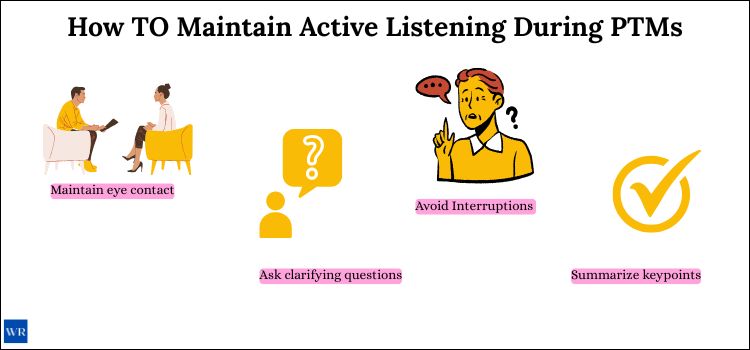
- Maintaining eye contact. By maintaining eye contact, you can confirm engagement and attentiveness.
- Asking clarifying questions. It ensures that you understand the other person’s perspective.
- Summarize key points. Reconfirms all the highlights of the PTM.
- Avoiding interruptions. Ensures that the flow of the meeting is maintained. Allows the other person to express their thoughts.
2 Respectful Dialogue
Even when discussing challenging topics, maintaining a respectful tone is crucial for fostering collaboration.

- Using “I” statements. We can focus on personal feelings and experiences rather than placing blame.
- Focusing on solutions. Try to shift the conversation from problems to potential solutions.
- Avoiding accusatory language. This prevents defensiveness and encourages open dialogue.
- De-escalate a heated conversation. During the PTM, if a conversation becomes heated, take a break and revisit the topic later with a calmer approach.
Also Read: Want to Promote Mother Tongue in Your Child?
3 Regular Updates
Proactive communication keeps everyone informed and engaged. Here are some ways for schools and parents to get regular updates.
A better approach to avoid any conflict or project your thoughts is to stay updated and informed. A recent example is the CBSE Parenting Calendar, which was released on 28 March 2025.
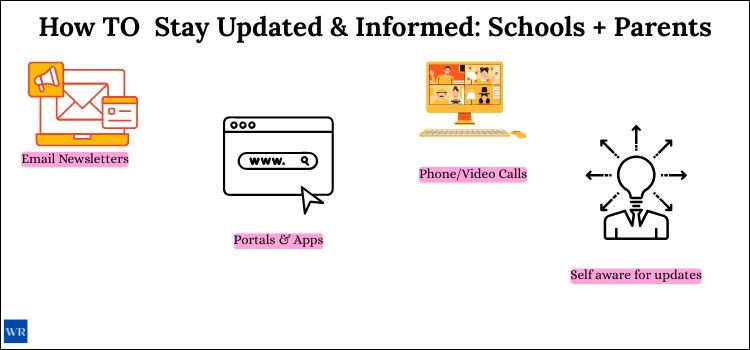
- Email newsletters. Emails are our go-to method of communication in today’s world. Schools can provide timely information about school events and activities.
- School portals and apps. Portals and apps can help access grades, assignments, and announcements. This can work for individuals as well as for a group.
- Phone calls or video conferences. Rather than frequently visiting the school premises, phone calls/ video conferences are beneficial for parents. It helps with personalised communication and relationship building from anywhere.
- Self-aware of updates. This is more beneficial for parents. You can check for updates on educational websites. Updates like the CBSE parenting calendar might take time for schools to implement. Yet, understanding and implementing its details at the right time can help improve parent-teacher dialogue.
Also Read: What is the art of Parenting through yoga?
4 Problem-Solving Approach
Collaboration is key to addressing challenges effectively. We can shift our mindset from who is at fault to how to address the issue. Here are a few ways to do so.
- Brainstorming solutions together. A desirable change can be seen when both players of the education system (parents and school ecosystem) work together to focus on the third player (students). It will also encourage creative thinking and shared ownership.
- Developing action plans. Provides a structured approach to implementing solutions.
- Following up on progress. Ensures accountability and allows for adjustments.
5 Utilising Technology Effectively
Technology can be a powerful tool for enhancing communication, but it’s important to use it wisely.
Also Read: Screen Smart Kids
- Limit screen time for kids. Schools can restrict teaching online in classrooms. This is especially true for younger ones where online storytelling is in fashion.
- Discuss the pitfalls of using technology for communication. Social media can give a false urge to replicate global cultural practices. This creates a lot of misunderstanding.
Also Read: Ways Outdoor Play Can Boost Children’s Learning Potential.
Conclusion
The CBSE Parenting Calendar, launched on March 28, 2025, offers a tangible roadmap for transforming the landscape of parent-teacher communication. By actively embracing these 5 excellent ways – fostering active listening, prioritising respectful dialogue, establishing regular updates, adopting a collaborative problem-solving approach, and utilising technology effectively – we can collectively bridge the gaps between home and school. This isn’t merely about smoother interactions; it’s about cultivating a unified and supportive ecosystem where our children thrive academically, socially, and emotionally. Let us commit to implementing these principles to foster more transparent, collaborative and effective parent-teacher communication. Share your comments and insights below in the comments section.
Share how you plan to implement the suggestions of the CBSE parenting calendar in the comment box.
FAQ
-
What is the CBSE Parenting Calendar?
CBSE Parenting Calendar, released on 28 March 2025, is a resource that outlines strategies for effective parent-teacher communication, designed to support a child’s academic journey.
-
How does the CBSE Parenting Calendar help parents?
It provides tips to foster a strong home-school partnership, track progress, stay informed about important dates, and actively participate in their child’s education.
-
Where can I find information on the CBSE Parenting Calendar?
You can find information and resources on the official CBSE website. You can either view or download the PDF.
Download CBSE Parenting Calendar.




Leave a Reply