
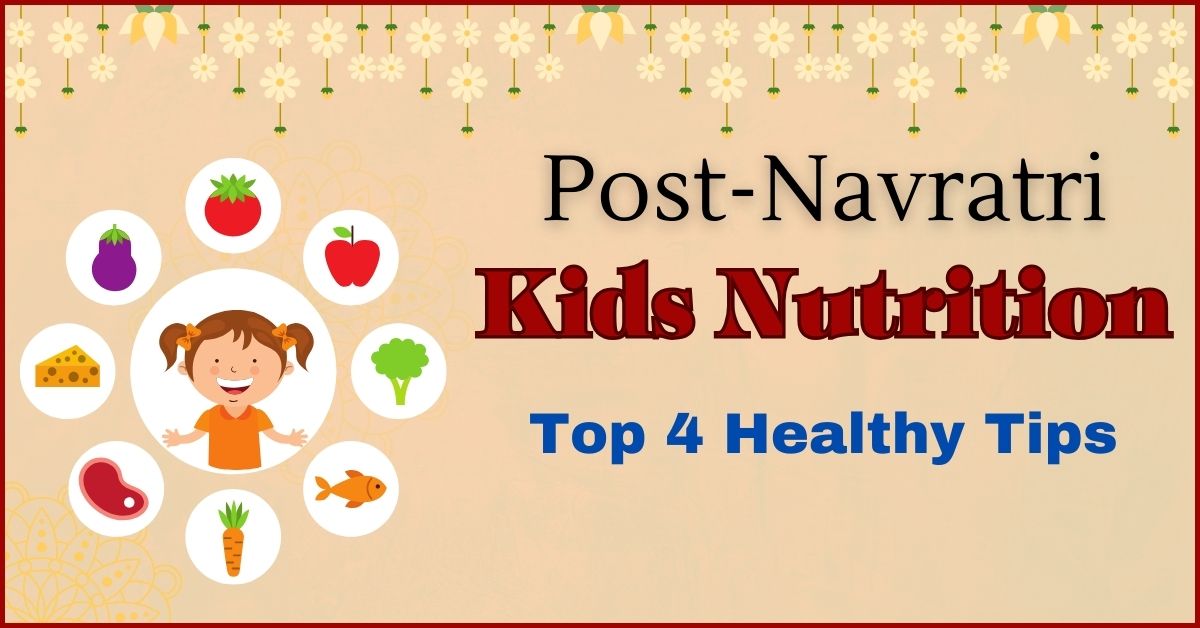
The vibrant and joyous Navratri celebrations have ended, and it is time for us (especially kids) to return to the health track. As parents, we are responsible for prioritising the post-Navratri kids nutrition and this article deals with four essential yet simple healthy tips. These tips can balance celebration and health, ensuring our kids stay on the right path of nutrition.
The Impact of Festive Food Deluge
Like any other festive celebration, Navratri is also a source of joy with mouthwatering sweets, fried snacks and delicious meals. While these are an integral part of the festivity, we shouldn’t forget overeating them can also be harmful to our bodies. As per Harvard Health Publishing, consuming excess added sugar can be a factor in obesity, cardiovascular disease, diabetes, high blood pressure and fatty liver disease.
We as parents can be a watchdog for our kids nutrition and prevent them from being trapped by the above diseases. Kids can be encouraged to eat wisely post-Navratri.
The Top 4 Healthy Tips for Post-Navratri Kids Nutrition
Table of Contents
1 Portion Control
What is Portion Control?
Portion control is a food-eating practice that a person consumes within a single-serving. It creates a balance between too much binging and the perfect quantity required for consumption.
Deciding the perfect amount for a single serving is necessary for overall growth. A balanced diet with conscious eating habits is the perfect combination for a healthy person.
Describing the reasons for longevity in Japan, Times Of India states that people in Japan have adopted the habit of slow eating and portion control. This lets them enjoy food and prevent over-eating.
Balancing a healthy diet after Navratri is important for the overall health of kids. Portion Control can keep any hike in the parameters under check.
Learn more about a healthy child eating routine.
How can we teach portion control to our kids?
Cultivating a habit of portion control among kids is highly recommended. Kids need to be educated that portion control is not just about main course meals but also casual binging.
- Portion Control Plate: The best way to teach food portion control to kids is to serve them on portion control plates. These plates can be a visual guide, as sections for food groups are segregated. My year-old loves eating on these portion-control plates. The smile on Vanshika’s(daughter) face when she says “Mumma Finished!!” is tremendous.
- Smaller Plates and bowls: Serving on smaller plates can be adopted while eating. My daughter loves pasta. I make it a habit to serve her on a smaller plate, ensuring that she will be provided extra servings if needed. Most of the time, she is full by the time she finishes her first serving. I also make sure to educate her on the impact of food wastage.
- No Food Rewards: It is a very common practice among parents to associate rewards with food. “We can have ice cream if you finish your homework on time.” “OK, finish your meal and you can have chocolate.” These are some of the common hints used to calm down children. We need to put an end to this. Instead, parents can reward kids by providing extra playtime or a visit to a park.
- Healthy Snacks: Providing kids with healthy snack options like homemade fruit shakes, homemade fruit juices, fresh-cut fruits, and smoothies. See my Instagram Post on Smoothies for Kids.
- Be patient: Developing a habit of portion control in kids can take time. Parents need to be gentle throughout the process.
2 Hydration Matters: Daily Water Intake

While dealing with healthy habits for our kids, we often miss including the importance of proper hydration. Our body is made up of about 60% of water and it is very important to maintain this balance.
Kids might have skipped to fulfill the daily water intake this Navratri. As parents, we can fill this gap. Here are a few factors that we need to know about the role of water.
Also Read: Key Components of a Healthy Child Eating Routine
The Importance of Daily Water Intake
Water as a component is vital for the human body. It helps to balance body temperature, prevent dehydration, remove waste materials through urine, bowel movements and sweat and also lubricates the joints.
Since kids tend to be more active as compared to adults, they must drink water as per the recommended proportions.
Water Intake Calculator
As per the Children’s Hospital Of Orange County, a water intake calculator sets the proper hydration bars for kids above the age of 1. A minimum of a 1-ounce cup (2 litres)is required for a one-year-old kid. Besides age, body weight can also be a factor in calculating the water intake per day requirement in kids.
Educating kids about the importance of maintaining water intake can be an accelerator for post-Navratri Kids Nutrition.
3 Added Sugar: Balancing Sweets

A very important aspect of the post-Navratri celebration is finding the perfect balance between cravings for added sugar and nutrition through natural sugar.
Added Sugar Meaning and Impact On Health
Any sweetened substance when processed and served to the consumers can be termed as added sugar. They are generally used to enhance the flavour of food.
Consuming added sugar in controlled proportion is fine, but overdose might lead to diseases like diabetes, heart disease and obesity to name a few.
As per the Centers for Disease Control and Prevention, Children under the age of 2 must not consume added sugar in any form.
Added Sugar vs Natural Sugar
Sugar is found in almost all naturally occurring substances from fruits to vegetables. Fructose is found in fruits, Lactose in milk products, Glucose in honey, Maltose in Barely and Sucrose (glucose+fructose) in plants. Since the proportion of sugar is balanced naturally in food, they are good for consumption.
On the other hand, added sugars are processed artificially. They are served as syrups and sometimes even misguided to consumers as “sugar substitute“. With zero essential nutrients, added sugar only builds up the calorie count.
Some commonly consumed foods/drinks contain added sugar.
| Food/ Drink | Added Sugar (Form) |
|---|---|
| 1. Soft-drinks | Fructose, Sucrose, Glucose |
| 2. Chocolate Bars | Sucrose, Glucose, Fructose |
| 3. Canned Soups | Fructose Corn Syrup |
| 4. Bread | Sucrose |
| 5. Ketchup | Fructose Corn Syrup |
Clearing Out Sweets: Donating and Sharing
The best way to halt the consumption of sugar post-Navratri is to donate/ share sweets before there is any quality degradation. This also can be a great opportunity to teach the value of sharing to our kids.
Ask children to make packets of sweets, drinks and other edible items. Make sure they are fit for consumption. Donate/share those packets with friends, relatives, under-privileged people.
4 Family Role Play: Being Fit Overall

Kids tend to imitate elders at home. Post Navratri, we as parents can set an example of fitness by staying fit. Exercising and adopting a healthy eating regime will benefit us as a family. Kids will pick up those and halt binge-eating unhealthy foods.
The best way to start can be family exercise time. Choose any form of exercise like Yoga, cycling, swimming and walking to name a few and move ahead in this direction. Allot time slots every week and increase it whenever you find it good enough. The level of complexity can also be increased.
Conclusion
As we bid adieu to Navratri, we also need to balance our health. By following portion control, balancing the daily water intake, cutting out on added sugar and being fit overall kids can be on the health track.
FAQs
-
What can I do to maintain Post-Navratri Kids Nutrition?
Encourage Portion Control eating habits, maintain the daily water intake, put a halt to added sugar and guide kids in maintaining overall health with family exercise.
-
How can I set a healthy example that could inspire my kid?
Be a role model by self-practising portion control, maintaining proper hydration, cutting off added sugar and exercising. Kids will slowly learn and adopt these changes.



Leave a Reply